In the world of Avowed, the player is never forced into a rigid class at the character creation screen. Instead, every skill point earned becomes a choice between three branches—Fighter, Ranger, and Wizard—allowing adventurers to craft a build as unique as the Living Lands themselves. For those who want to wade into battle with heavy armor and a two-handed blade, the path of the Fighter is clear. But is a pure Fighter build really the best way to survive the dangers ahead? The answer, as seasoned players have discovered since the game’s release in 2025, is a carefully curated mix that pulls essential tools from all three trees while keeping the focus on frontline dominance.
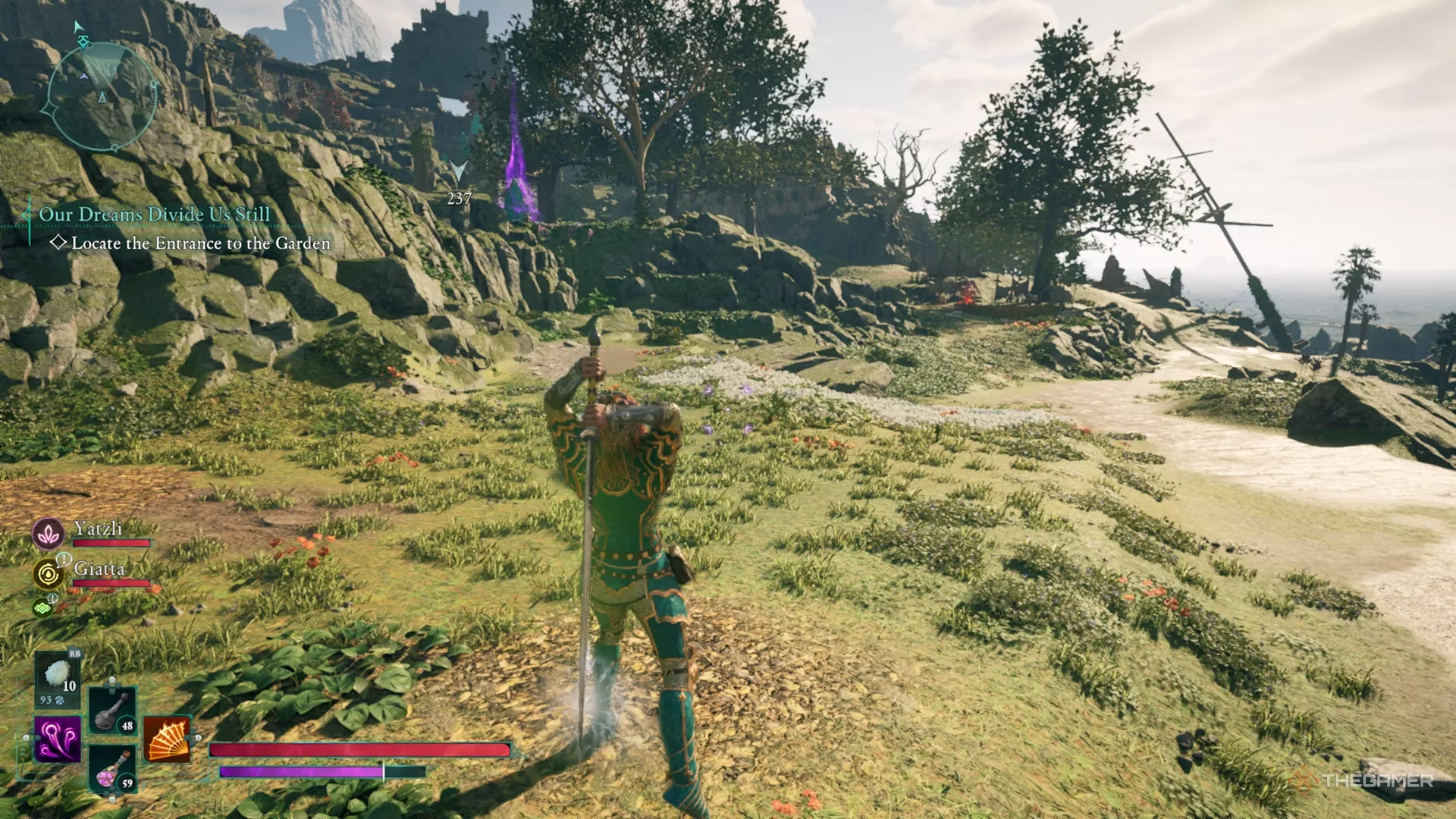
⚔️ Core Fighter Skills: The Backbone of Any Frontline Build
Skill points are a finite resource, especially in the early hours, and a Fighter cannot afford to grab every shiny ability. The tree itself is deep, but only a handful of talents truly define a devastating melee combatant. Below is a breakdown of the highest-priority picks, organized by the level they unlock.
Level 1 – Laying the Foundation
At the very start, three skills demand immediate attention: Armored Grace, Constant Recovery, and Toughness. Armored Grace is arguably the most critical, as medium and heavy armor—the Fighter’s bread and butter—inflicts a punishing stamina penalty without it. One point here keeps your dodge and block economy healthy. Constant Recovery passively regenerates health, which becomes a lifesaver between encounters and during prolonged boss fights. Toughness simply expands your health pool, and every extra hit point is a chance to land one more crushing blow.
Charge might look like the obvious offensive opener, but its utility is limited compared to the survivability trio. Some Fighters skip it entirely in favor of grabbing Minor Missiles from the Wizard tree—a quick ranged option that gives Essence a purpose and pulls enemies from a distance. Shield Bash offers a bit of crowd control, but the Ranger skill Parry outclasses it in almost every scenario, so it’s typically left behind.
Level 5 – Offensive Power Spikes
Once the base is solid, damage output becomes the priority. Brawn is the undisputed champion here, boosting all two-handed weapon damage by a significant margin. Since greatswords and axes are the Fighter’s hallmark, this is the first skill to take at this tier. Next comes Bleeding Cuts, which adds a damage-over-time component to those same weapon types, ensuring even a single landed strike continues to work in your favor. Devastating Criticals increases critical hit damage, a stat that only grows more potent as later abilities amplify crit chance. Barbaric Shout provides a temporary burst of power, but its cooldown makes it less reliable than the permanent passives. Iron Fists—a nod to unarmed combat—quickly loses relevance once you find a proper weapon.
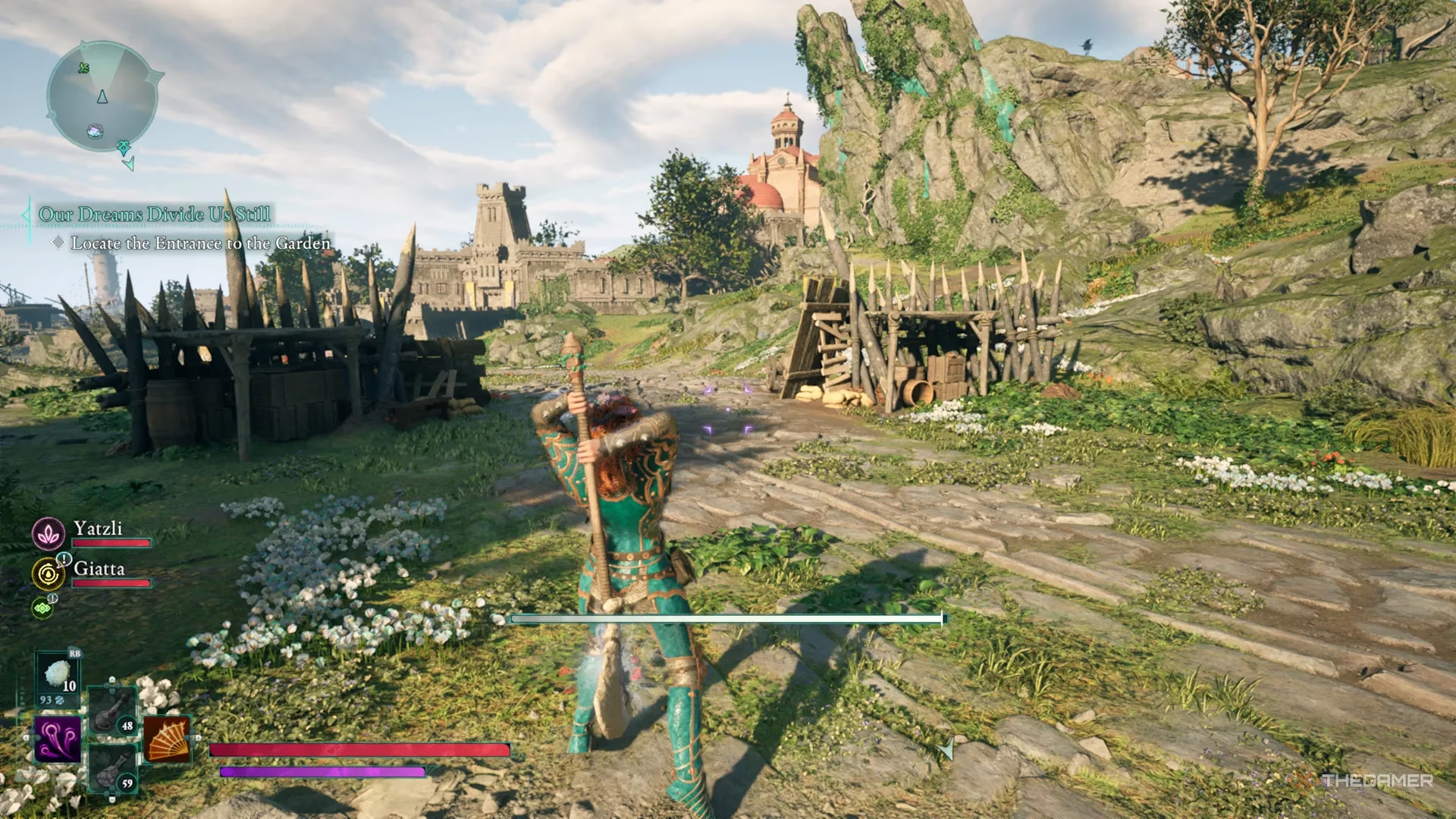
Level 10 – Situational But Solid
Here the choices narrow to four, and two stand out as clear winners. Built to Destroy not only heals you when you break props and destructible walls but also reveals hidden paths; the sustain it provides in combat-heavy areas is surprisingly valuable. Unbreakable reduces the stamina cost of blocking, which pairs beautifully with a parry-centric playstyle. Power Jump and Stunning Blows, on the other hand, are too niche—the former rarely connects in the heat of battle, and the latter demands maces and hammers, weapons most Fighters leave behind in favor of swords.
Level 15 – Turning Pain Into Power
Retribution is the star of this bracket, reflecting 70% of the damage you receive back at your attacker—and scaling to 120% with additional points. This skill alone justifies standing in the thick of chaos; the more punishment you soak, the harder you hit. Into the Fray yanks enemies closer, synergizing naturally with Retribution, but its short range means it’s more of a convenience than a necessity. Reflect blocks projectiles, a handy but not essential defensive layer.
Level 20 – The Endgame Capstones
At the peak of the Fighter tree, Clear Out transforms the player into a spinning vortex of steel. It is both devastating and immensely satisfying, easily the first pick at this level. The alternative, Inspiring Triumph, heals companions on kill and, with a second point, can revive fallen allies. Companions in Avowed, however, rarely pull enough weight to justify sacrificing a point that could go elsewhere. For most, Clear Out remains the undisputed choice.
🏹 Essential Ranger Skills for a Melee Juggernaut
Even a dedicated Fighter benefits from dipping into the Ranger tree. Certain skills there bolster core combat mechanics without diluting the build’s identity.
Level 1 – Survivability and Parrying
Survivalist enhances the healing potency of food, making it a one-point wonder that complements Constant Recovery. Parry is the real gem: it allows a Fighter to deflect incoming melee attacks with precise timing, a mechanic that feels far more impactful than a simple block. While Shield Bash exists in the Fighter tree, Parry’s tighter windows and higher reward make it the superior reactive defense. Tanglefoot (a root) and Evasive (dodge-focused) hold little value for someone who stands their ground.
Level 5 – Secondary Weapon Synergies
If you equip a bow or gun as a backup weapon, Marksmanship is a worthwhile investment, but for a pure melee enthusiast these points are better saved. Finesse and Piercing Thrusts only affect specific one-handed weapon types, which rarely feature in a greatsword-centric build. Shadowing Beyond grants stealth, useful for quest exploration but not for the front line.
Level 10 – Arrow Deflection and Quick Switch
Arrow Deflection extends the parry mechanic to projectiles, an upgrade that makes charging into ranged enemies far less risky. It’s not mandatory but elevates the Parry skill to new heights. Power Slide and Quick Switch can be safely ignored.
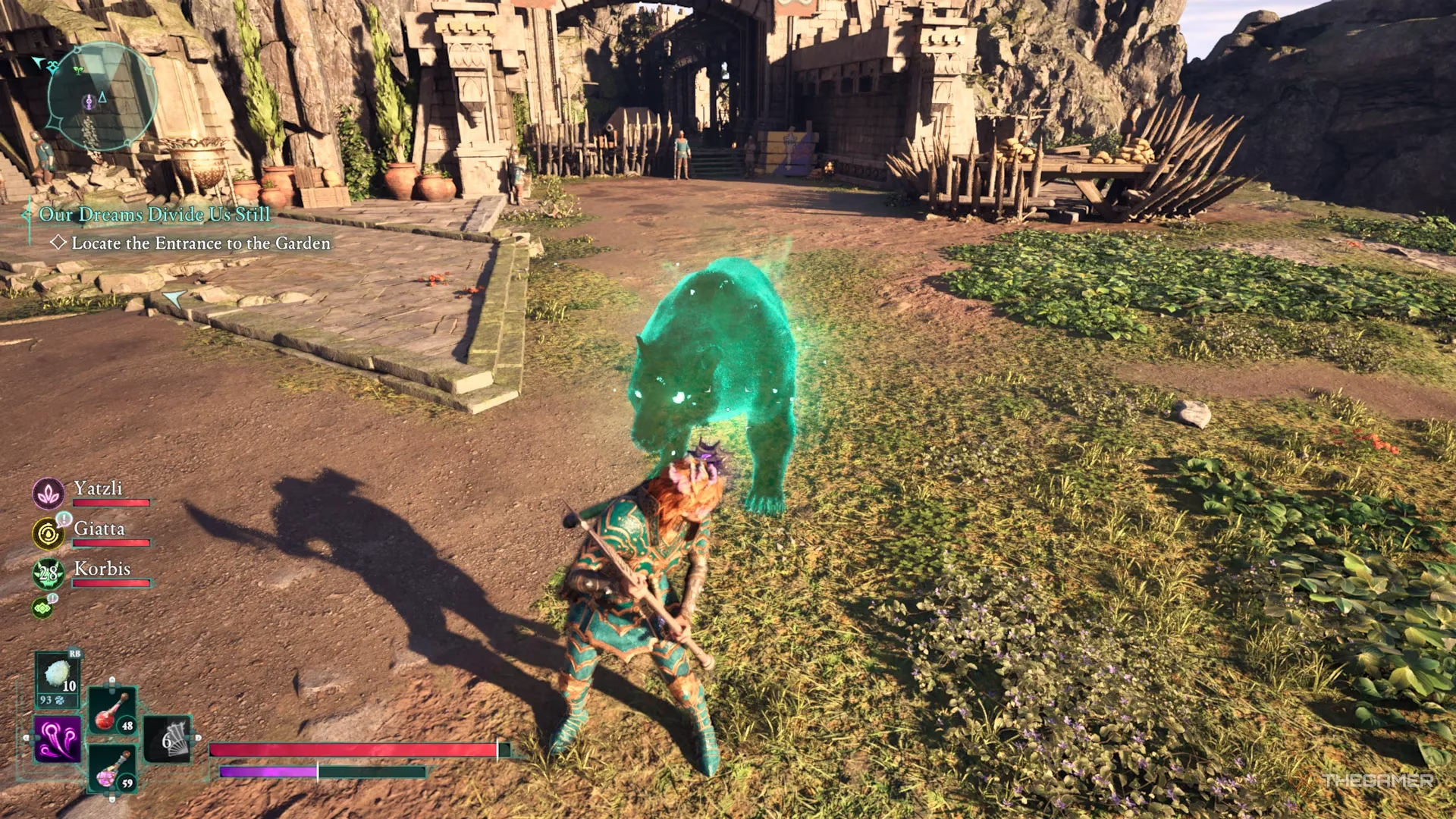
Level 15 – Critical Strike and the Bear
Critical Strike is the standout here, raising critical hit chance by 10% (scaling to 20%). If you’ve already taken Devastating Criticals in the Fighter tree, this skill creates a feedback loop that shreds bosses. Bear Ally summons a temporary bear companion, but by the time you reach level 15, the bear feels underwhelming compared to your own damage output. For Fighters, the bear is a diversion at best.
Level 20 – Flurry of Blows
Flurry of Blows increases attack speed, and its second point grants lifesteal. This is a game-changer for greatsword users whose swings can feel sluggish. The sustain from lifesteal, combined with Built to Destroy and Constant Recovery, creates an almost unkillable war machine.
🪄 The Wizard Dip: One Spell and Nothing More
A Fighter’s essence bar should not sit idle, but investing heavily in the Wizard tree is a trap. The community has settled on a simple rule: grab exactly one damaging spell and leave the rest untouched.
Minor Missiles is often the first skill any new character receives, and it remains the best initial pick. It gives the Fighter a ranged option that requires no weapon swap and consumes essence that would otherwise go to waste. Once a Grimoire of Elements is obtained, Fan of Flames becomes a more attractive alternative, as it spreads damage over a wide area and applies a burn effect. Beyond these two, no spell justifies the skill point cost.
If a wand is used as a secondary weapon, Wand Mastery at level 5 is a solid pick, boosting power attack damage by up to 50%. Blast can also complement wand play by adding an area explosion to power attacks. For a pure melee Fighter, however, none of these Wizard investments are necessary.
🛡️ Putting It All Together: A Level-by-Level Roadmap
To survive the Living Lands in 2026, the optimal Fighter build doesn't rely on a single tree. It cherry-picks the best and leaves the rest. The table below summarizes the highest-priority skills by level across all three trees.
| Level | Fighter Skill | Ranger Skill | Wizard Skill | Notes |
|---|---|---|---|---|
| 1 | Armored Grace, Constant Recovery, Toughness | Parry, Survivalist | Minor Missiles | Survivalist only needs 1 point; Parry scales well |
| 5 | Brawn, Bleeding Cuts, Devastating Criticals | - | - | Brawn first; skip Iron Fists |
| 10 | Built to Destroy, Unbreakable | Arrow Deflection (if Parry is used) | - | Unbreakable can be delayed if Parry is strong |
| 15 | Retribution | Critical Strike | - | Retribution first; Into the Fray is optional |
| 20 | Clear Out | Flurry of Blows | - | Clear Out immediately; Flurry for lifesteal later |
Remember, the beauty of Avowed lies in its flexibility. A Fighter who ignores the Ranger tree altogether will still succeed, but those who weave in Parry, Critical Strike, and Flurry of Blows will find themselves a cut above the rest. The Living Lands are unforgiving—why make them harder than they have to be?