The first thing that hit me as I stepped into that forsaken jail was the smell – a cocktail of old blood, rotting flesh, and damp stone that clung to the back of my throat. The small island fort had clearly seen better days, and by the look of the corpses strewn across the floor, those days were long gone. Only one cell still held a living soul: a woman with sharp eyes and a guarded stance, sharing her cramped quarters with a very dead cellmate. Her name was Ilora. She didn’t beg or panic; instead, she studied me, as if measuring whether I was worth the trouble. A shiver ran down my spine. Everything about the scene screamed danger, but curiosity – and maybe a touch of foolish empathy – wedged itself firmly in my mind. So I asked myself the question that every envoy faces in that moment: should I free her?
Searching for the Key
The cell door was solid iron, and there was no forcing it open with brute strength. I needed a key. I scoured the immediate room, kicking aside debris, but came up empty. The only plausible lead was a barred doorway to the west – tantalizingly close, yet completely inaccessible unless I found another route inside. My eyes drifted upward. A precarious pile of crates, draped with a faded yellow and purple flag, leaned against the wall near the back. It wasn’t exactly an official maintenance passage, but it would do. I hauled myself up, splinters biting into my palms, and carefully leaped across a small gap onto a creaking wooden platform.
Ahead, the path split. To the left, I spotted a common bow propped against a barrel and, beyond it, a familiar obstacle – a tangle of Magran’s Fury vines blocking my progress on the lower floor. Obliging the game’s unspoken hint, I nocked an arrow, ignited it, and sent it whistling into the vines, which erupted in a satisfying burst of flame and ash. But instead of climbing back down, I lingered. The platform continued, leading me over what should have been solid flooring. There, in a patch of dried blood and splintered wood, something felt… off. A prompt appeared: Smash. I stomped down hard, and the planks gave way, plunging me into a cramped, hidden chamber below.
The room was tiny, more of a forgotten storage nook than anything else. A faded interrogation log lay on a table, detailing Ilora’s rebellious activities and confirming she was far from innocent. But my prize hung right beside the barred door that connected back to the main jail area – a simple iron key labeled Forth Northreach Jail Key. I snatched it and climbed back out, pulse quickening. I now held the power to decide another person’s fate.
To Free or Not to Free?
Standing before Ilora’s cell, key in hand, I weighed the risks. She was clearly a rogue, someone who’d probably stab me in the back the second it benefited her. Yet when I looked past the grime and suspicion, I saw a survivor, and if there’s one thing I’ve learned in the Living Lands, it’s that every capable ally counts. The interrogation log hadn’t painted her as a monster – just a woman fighting against the powers that be. Maybe that was reason enough.
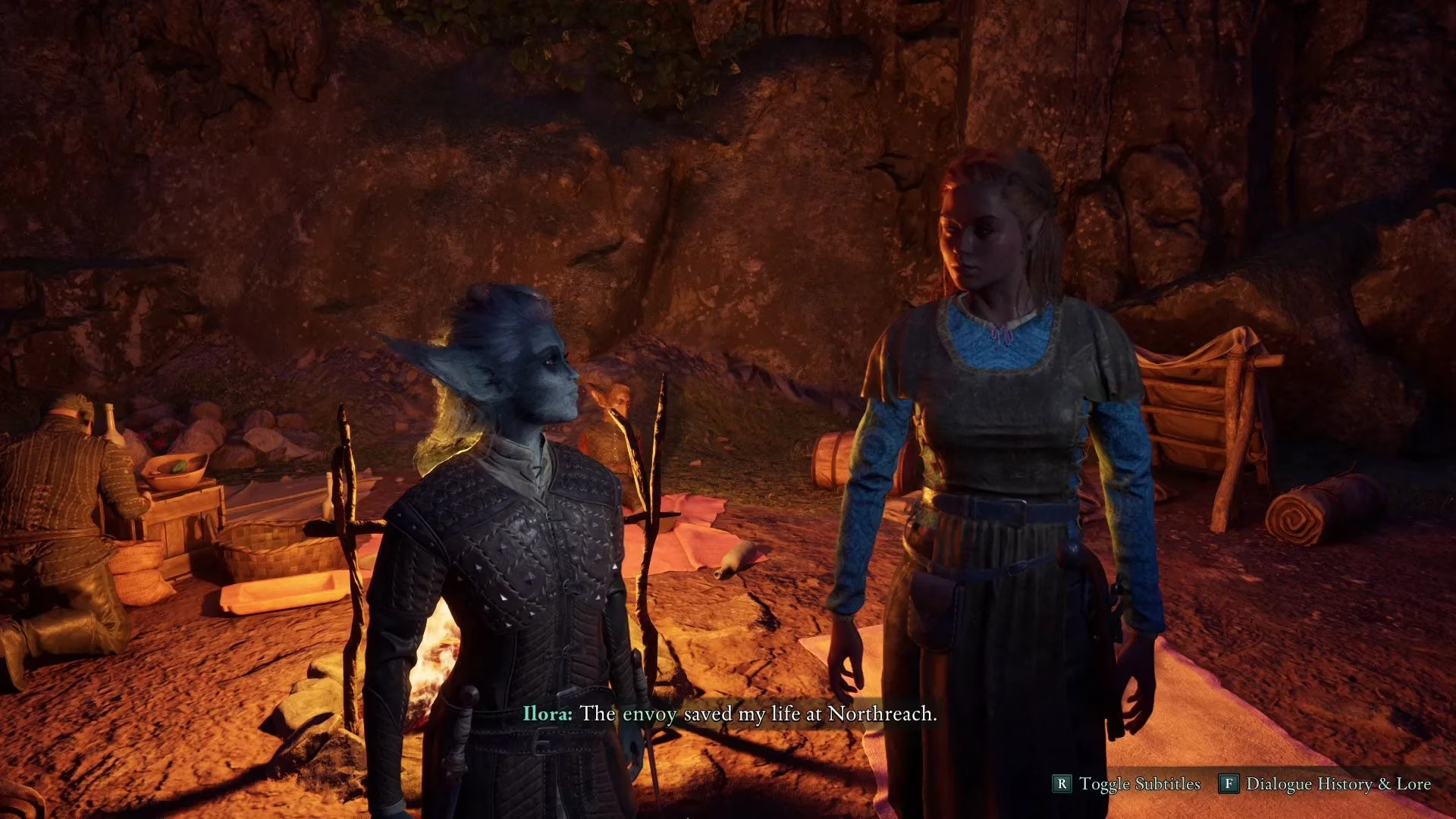
I slid the key into the lock. The mechanism groaned, and the door swung open. Ilora didn’t gush with gratitude. She simply gave a crooked half-smile, grabbed her gear, and said something dry about not being a burden. But her actions spoke louder. From that moment until we escaped the island, she fought alongside me, her fire spells scorching the undead that swarmed from every corner. When we faced the island’s monstrous boss – a bloated, gibbering thing that nearly overwhelmed me – Ilora’s flames turned the tide, allowing me to land the killing blow. I realized then that freeing her wasn’t just an act of mercy; it was a tactical godsend.
The Ripple Effect
Days later, safe(ish) in the bustling port of Dawnshore, I picked up a side quest called Escape Plan. Two convicted felons – a desperate couple – needed help getting smuggled out of the city. I agreed to assist, and eventually found myself in a hidden smugglers’ den, face-to-face with a familiar figure: Ilora. She recognized me instantly. Because I had freed her back on that blighted island, she vouched for my trustworthiness without hesitation. The leader of the smuggling ring, who clearly had a long memory and a short temper, was ready to demand a hefty bribe or start a fight. But Ilora’s word was enough to smooth things over. No coin changed hands, no blood was spilled.
It hit me then just how brilliantly Avowed rewards even minor decisions. A single key, a moment of trust, and Ilora’s story wove itself back into mine, making the world feel genuinely reactive. In other games, jail-cell NPCs might be forgotten after the tutorial, but not here. She stayed relevant, her assistance tangible.
So, should you free Ilora? If you’re still pondering in your own playthrough, let me spare you the internal debate: absolutely. There’s no hidden betrayal, no moral catching up to bite you later. She’ll fight by your side through the climax of the first island, and her long-game payoff during Escape Plan is a cherry on top – saving you resources or an unnecessary brawl. Besides, leaving her locked up feels unnecessarily cruel, even for a hardened envoy. Trust me, that key is worth using.
🔑 Player Tip: After freeing Ilora, speak with her in the fort before moving on. Her dialogue offers extra context on the island’s infestation and her own mysterious past, which makes the later reunion in Dawnshore even more meaningful.
In the end, I never regretted my choice. Ilora became an unexpected thread in the tapestry of my adventure – a reminder that sometimes the right call isn’t the cautious one, but the one that opens a door and lets a little chaos in.