I can still feel the weight of that first moment in the Living Lands. The Dreamscourge was a creeping horror I didn’t yet understand, and I was just another Envoy from the Aedyr Empire, sent to impose order on a place that had never known it. But Avowed never let me forget that every word I chose, every allegiance I forged or shattered, would echo far beyond that conversation. In 2026, over a year after Obsidian’s fantasy RPG launched, I finally sat down with it—and I emerged with a story I never expected to tell.
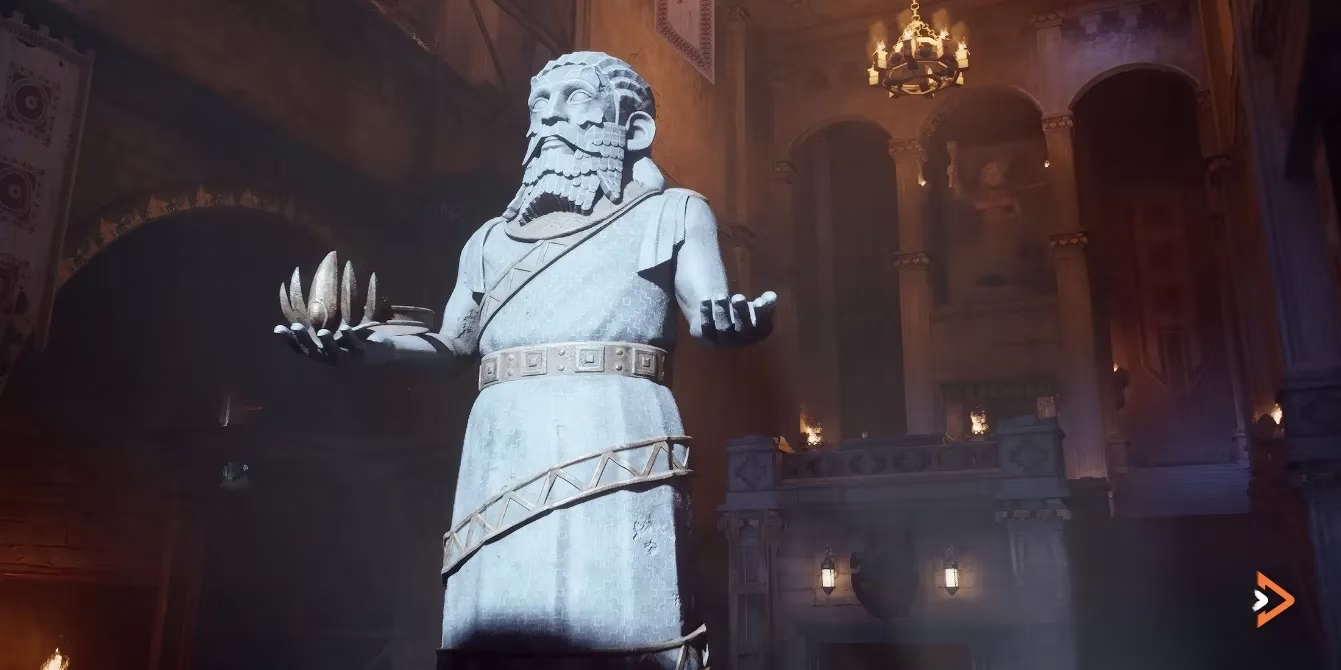
From the earliest dialogue with a terrified settler, the game’s philosophy was obvious. I wasn’t just picking between paragon and renegade; I was carving a personality into the world. This is what Kate Dollarhyde, senior narrative designer at Obsidian, once described as the studio’s guiding value: player choice. And having played through Avowed twice now, I can see that DNA everywhere. The game inherits the spirit of Pillars of Eternity, where the Watcher faced impossible moral dilemmas, but here the Envoy’s decisions feel even more intimate—more human.
At first, I thought the choices were small flavor moments. I’d console a grieving farmer instead of dismissing his fears, or share a campfire story with a companion instead of pressing for tactical information. Those decisions didn’t seem to matter in the classic RPG sense; there was no alignment meter ticking behind the scenes. But Dollarhyde’s comments about quest design stuck with me as I played: Obsidian doesn’t count the number of choices, they measure impact and scale of reactivity. I learned that lesson the hard way.
About fifteen hours in, I stumbled into a quest in a crumbling mining settlement called Rustveil Hollow. The overseer begged me to destroy a vein of corrupted adra to slow the Dreamscourge’s spread, but doing so would poison the water supply for dozens of families downstream. A pragmatic choice—the kind I typically make in games—seemed obvious. I triggered the collapse, walked away, and expected a brief notice in my journal. Instead, two real-world hours later, I found an entire village downriver abandoned, its survivors scattered and cursing the Empire. A companion, Giatta, confronted me at camp that night. She didn’t just complain; she questioned my entire worldview, her voice rising with a mixture of betrayal and curiosity. Her ties to the Living Lands—her commitment to its people—made that scene hurt in a way dialogue trees rarely do.
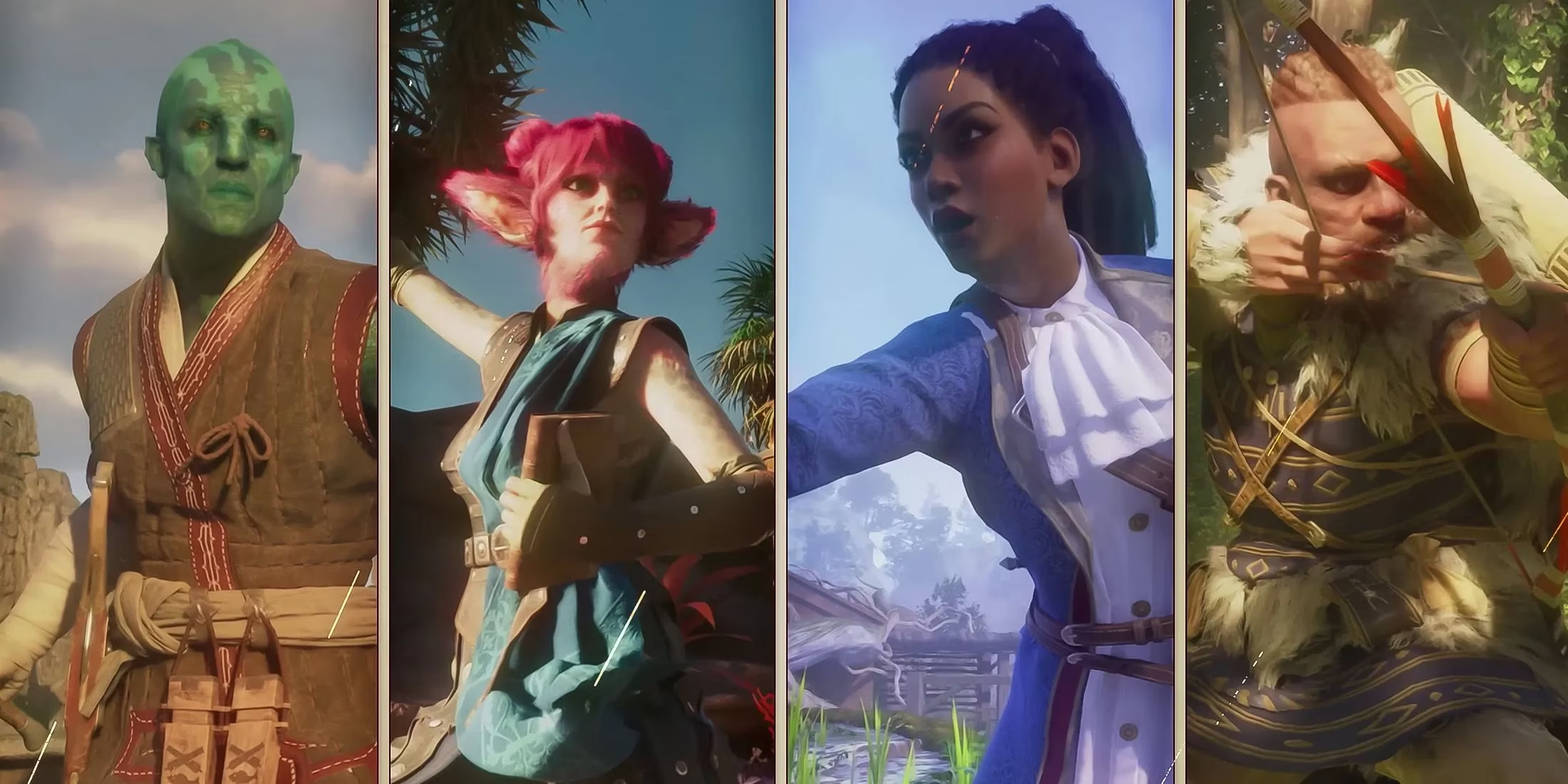
That’s the beauty of Avowed’s companion system. Dollarhyde explained that every party member comes from a different settlement, and they all have a vested interest in what the Envoy does. Some are more confrontational—Kai once nearly left my party after I executed a captured bandit without a trial, calling me out on the contradiction between my diplomatic title and my brutal methods. Yet these aren’t just scripted triggers. The game tracks your pattern of behavior, and the companions start building a profile of who you are. If you’ve been merciful twenty times, one act of violence carries different narrative weight than if you’ve been a tyrant all along. The effect is cumulative, just as the designers intended: small choices compound, altering which options are available at critical junctions.
By the time I reached the endgame, I realized how many threads tied back to those early, seemingly minor dialogues. A refugee child I’d encouraged to join a merchant guild returned as a skilled negotiator who could broker peace with a hostile faction. A historical text I’d chosen to discuss with a scholar unlocked an alternative solution to the final confrontation with the Dreamscourge’s source—an outcome that wouldn’t have been possible if I’d ignored the side content. This isn’t an illusion of choice like in some blockbuster RPGs; it’s reactivity that respects your time and attention.
One of my favorite moments came when I deliberately tried an “evil” playthrough. I killed a crucial quest giver early—a grieving mother who held the key to a lost network of Dreamscourge survivors. The game did the unthinkable: it let me close off that entire storyline permanently, but it also filled the vacuum with a new, darker faction that rose because no one stood in their way. The Living Lands felt alive, adapting to my presence rather than waiting for me to press the right button. For a fan of Obsidian’s older titles, it was a spiritual successor to New Vegas’s brutal cause-and-effect chains.
Looking back, Avowed gave me a treasure that few games offer: the sense that my journey was uniquely mine. Not because of a character creator or a branching finale, but because the world listened and remembered. In 2026, with so many open-world adventures vying for attention, this dedication to meaningful reactivity keeps Avowed lodged in my mind. Whether you’re comforting a companion by the campfire or poisoning a village to save a region, you’re not just playing a role—you’re writing a story that can only belong to you. And that, I think, is exactly what Obsidian meant when they said player choice is at the core of everything they do.