In the world of action RPGs released in 2025, Obsidian Entertainment's Avowed has carved out a niche for itself by offering some of the most immersive role-playing experiences in recent memory. However, a curious dichotomy has emerged within its sprawling fantasy world of Eora: while the game's side quests present players with morally complex, thought-provoking dilemmas that resonate long after the controller is set down, the main narrative often feels disappointingly straightforward by comparison. It's a tale of two storytelling approaches within the same game, creating an experience that's simultaneously brilliant and frustrating.
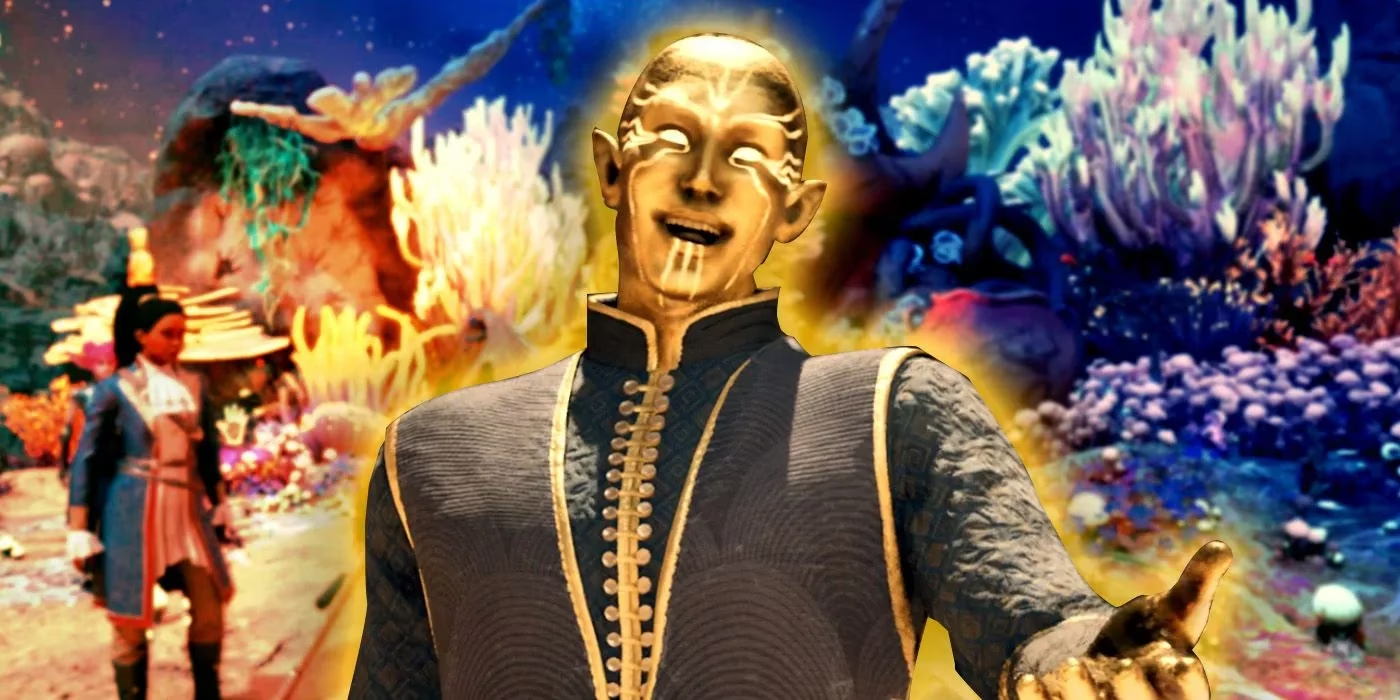
From the opening hours, it's clear that Avowed isn't playing around when it comes to player agency. The game completely eschews the binary morality systems that have become commonplace in the genre—there's no Paragon/Renegade meter à la Mass Effect, no simple good/evil slider. Instead, players are presented with dialogue trees that genuinely allow them to shape their Envoy into whatever type of character they envision. What's particularly impressive is how these early choices echo throughout the entire game, with dialogue options selected during the initial hours being referenced as far as the story's conclusion. This isn't just window dressing; it's a commitment to consequence that makes each playthrough feel uniquely personal.
Where Avowed truly shines, though, is in its side content. These optional adventures present players with moral quandaries that would make even the most decisive gamers pause for reflection. Consider the "Dawntreader" quest, which forces players to decide the fate of Sargamis—a character who has just murdered an entire Aedyran expedition. The game presents three options:
-
Let him try to repent (trusting that someone who just committed mass murder has genuinely reformed)
-
Have him sacrifice himself (a form of capital punishment with religious undertones)
-
Fight and kill him (direct retributive justice)
As one player noted, "I had to wait about 30 hours to learn that" sparing Sargamis turned out okay, creating genuine anxiety about whether they'd made the right call. This is role-playing at its finest—decisions with weight, consequences that aren't immediately apparent, and no obvious "correct" answer.
Another standout example occurs in Thirdborn during the "Heart of Valor" quest, where Keipo asks for a Leviathan Heart to end his own life before the Dreamscourge claims him. This scenario raises profound questions about bodily autonomy, the ethics of assisted dying, and when (if ever) intervention is justified. The game doesn't provide easy answers, instead forcing players to confront their own values and beliefs. These side quests transcend typical fantasy fare, prompting consideration of real-world ethical frameworks through the lens of Eora's conflicts.
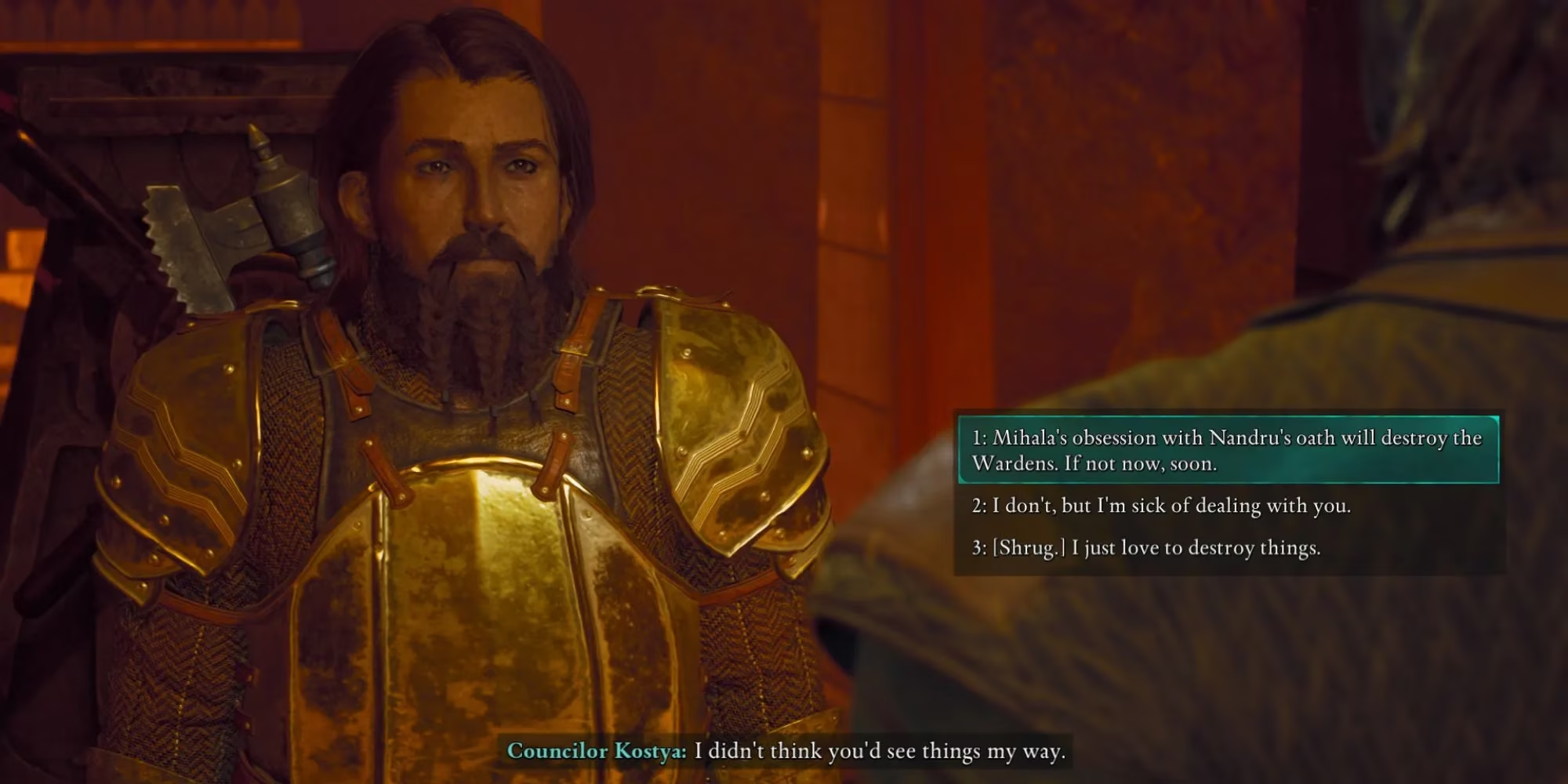
Why Side Quests Work Better:
| Aspect | Side Quests | Main Story |
|---|---|---|
| Moral Complexity | High - genuine dilemmas with no clear answers | Moderate to Low - often obvious "right" choices |
| Player Agency | True freedom to role-play different philosophies | Sometimes constrained by narrative necessities |
| Consequence Timing | Delayed, creating uncertainty | Often immediate or clearly telegraphed |
| Real-World Parallels | Subtle, thought-provoking | Sometimes heavy-handed or obvious |
Unfortunately, this sophistication doesn't consistently carry over to the main storyline. After an initial strong start—including the memorable moment where players must decide whether to forgive their own killer—the narrative introduces the Steel Garrote and Inquisitor Lödwyn, who essentially function as mustache-twirling villains. Lödwyn's introduction is particularly problematic from a role-playing perspective: she arrives putting entire cities to the torch for breaking Aedyran laws and labeling non-believers as heretics. As one observer put it, "any illusions that Aedyr may represent some force for good were quashed when Inquisitor Lödwyn shows up."
This villainization makes several major story choices disappointingly straightforward. When presented with decisions about characters like Naku Kubel and Solace Keep, players immediately question whatever side Lödwyn supports. The game reinforces this through companion reactions—they harshly criticize any consideration of working with Lödwyn and will ultimately abandon the party if players align with her. This creates a situation where what should be complex political and moral decisions become simple binary choices: side with the obvious villain or oppose her.
Even potentially nuanced moments are undermined by this setup. When considering whether to free Sapadal, players might briefly question their commitment upon hearing warnings from another Godlike's soul. However, as noted in gameplay experiences, "I immediately stopped questioning it when Nandru started praising Lödwyn's god, Woedica." The choice becomes even easier after meeting Woedica herself and learning about her massacre of the Living Lands' original inhabitants.
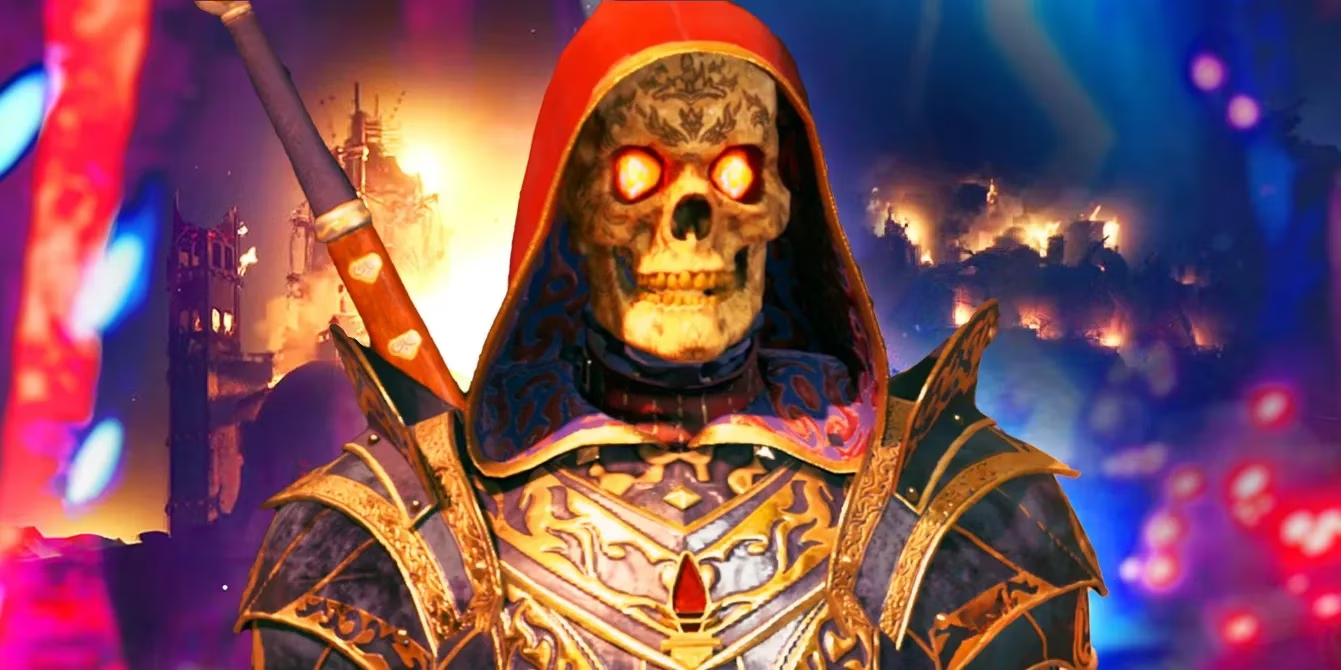
The main story's heavy-handed approach extends to its real-world parallels. While the side quests draw subtle connections to contemporary ethical debates, the main narrative sometimes employs less nuanced references. One particularly blunt moment occurs when Woedica's destruction of a library prompts a dialogue option about how burning books is "how it always starts"—a clear historical reference that removes ambiguity rather than fostering contemplation.
This isn't to say the main story is without merit. The world-building remains consistently excellent, and the central conflict against the Dreamscourge provides a compelling throughline. The problem lies in the execution of player choice within that narrative. As one critic observed, "I was a little let down by how often the right choice had been signposted for me" in the main quests, contrasting sharply with the genuine uncertainty of side content.
Companion reactions further illustrate this divide:
-
✅ In side quests: Companions offer varied perspectives that complicate decisions
-
✅ Their approval feels earned through nuanced interaction
-
❌ In main story: They uniformly condemn Lödwyn alignment
-
❌ Their departure feels predetermined rather than responsive to player philosophy
What makes this disparity particularly puzzling is that Avowed clearly demonstrates the capacity for sophisticated moral storytelling. The side quests prove that Obsidian's writers understand how to create genuine dilemmas where every option carries both benefits and costs. The game's dialogue system shows they've moved beyond simplistic morality meters. Yet in the main narrative—the part of the game that theoretically should carry the most weight—they often revert to more traditional RPG tropes of clear heroes and villains.
This creates an interesting dynamic where players might find themselves more invested in the fates of side characters like Sargamis or Keipo than in the ultimate resolution of the Dreamscourge plot. The personal, intimate stakes of the side quests often feel more meaningful than the world-saving imperative of the main story, precisely because they aren't presented in such black-and-white terms.
Looking forward to 2026 and beyond, Avowed stands as both an achievement and a missed opportunity in RPG design. It demonstrates that modern players are ready for—and hungry for—genuinely complex moral storytelling in their games. The side content shows what's possible when developers trust players to navigate ambiguity without clear guideposts. Yet the main story's reliance on more traditional narrative structures suggests that even innovative studios can struggle to maintain complexity at scale.
For players diving into Avowed today, the experience remains rewarding, particularly for those who prioritize role-playing freedom over narrative cohesion. The game's world is beautifully realized, its combat engaging, and its side content some of the best in the genre. Just don't be surprised if you find yourself remembering the quiet moral crisis in Thirdborn long after the fate of the Living Lands has been decided.