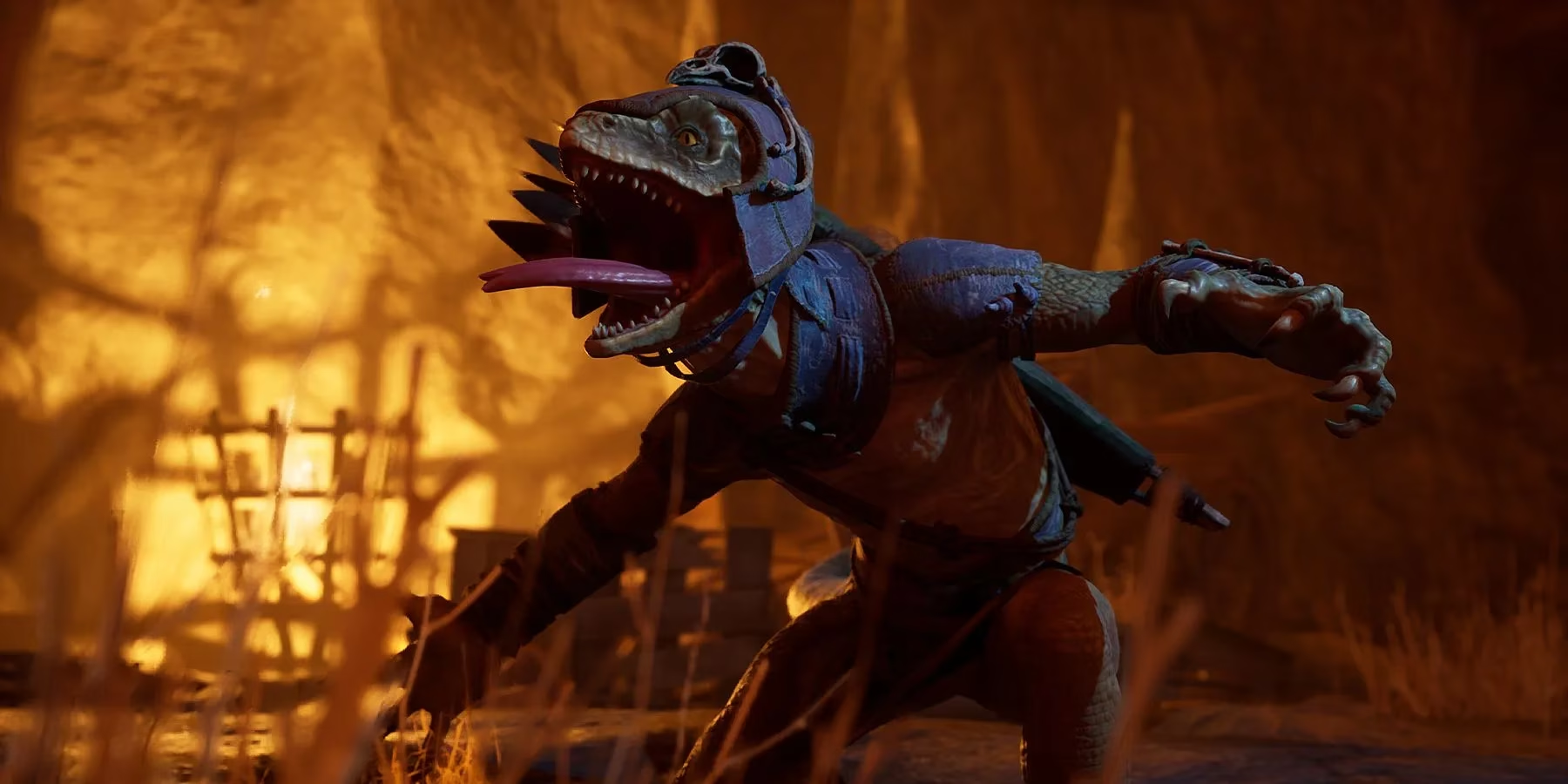
I still remember watching the Xbox Developer Direct footage for Avowed and feeling a strange split in my gamer brain. On one screen, Obsidian was offering a first-person fantasy RPG set in the Pillars of Eternity universe, which is exactly the kind of lore-rich playground I love. On another screen, the combat looked like a fireworks display set off in daylight: bright, busy, and weirdly weightless. The footage showed weapons, spells, and a roaring reptilian creature, but it never showed a boss fight. That absence stuck with me. Now, in 2026, with Avowed long since released, I can look back at that pre-launch moment like a diary entry written by a suspicious fortune teller. The concern was not that Avowed lacked combat. The concern was that Obsidian had not shown me the fight that would prove its combat had teeth.
The Showcase That Left Me Wanting More
The Developer Direct spent a lot of time on Avowed's combat system, and I appreciated the ambition. Obsidian showed weapon swaps, spell effects, and a first-person perspective that made the Pillars of Eternity world feel immediate. But many fans were left unimpressed, and I understood why. From what was shown, many enemies looked lethargic, barely moving, and less threatening than a sleepy guard dog. I could imagine simply adopting a purely offensive approach and deleting them before they had a chance to respond. That is not the kind of combat demo that makes me lean forward in my chair. It makes me lean back and ask, where is the pressure? Where is the dance? Where is the moment when the game says, prove it?
Obsidian later confirmed that it was hard at work improving Avowed's combat based on player feedback. That was the right move, but it also made the missing boss fight feel more important. A combat showcase without a boss is like a stone dropped into a shallow pond: I see the ripple, but I do not feel the depth. I wanted a fight that would show me what happens when the player cannot simply mash offense and win. I wanted to see the game's systems under strain.
Boss Fights Are the Tuning Fork
A boss fight is the tuning fork for an RPG's combat; it tells me whether the instrument can hold a note when the room goes quiet. Trash mobs are the scales, not the symphony. Obsidian could have revealed one boss encounter without spoiling the story, and it would have changed the conversation around Avowed. A boss fight is where mechanics collide: dodging, positioning, resource management, elemental weaknesses, and the small panic of realizing your favorite weapon is not the answer. If Avowed had a boss fight worth bragging about, revealing one early would have been like a chess player showing me a pawn and then quietly sliding the queen forward. It would have told me that the game had a plan beyond the opening moves.
Instead, the pre-launch footage left me with a question mark. That question mark was not fair to the full game, but it was real. In a crowded RPG market, attention is a currency, and a boss reveal would have been a strong coin to place on the table. Obsidian did not need to show every phase or every arena trick. One tight encounter would have been enough to prove that Avowed's combat could escalate.
What The Outer Worlds Taught Me
I kept thinking about The Outer Worlds, Obsidian's previous RPG. Its boss fights were not typical bosses; they were hard-to-kill NPCs with large health pools and very few unique mechanics. That worked well enough for that game, but it also meant I did not trust Obsidian to automatically nail a traditional boss fight. Fallout: New Vegas had similar limits. Avowed's fantasy setting and first-person combat could introduce new mechanics, differentiating bosses from normal fights. That was the ace up its sleeve. The problem was that Obsidian kept the ace face-down. In a pre-launch marketing cycle, a face-down ace is just a card.
Avowed's boss fights could have been the hidden hinge on which the whole door of combat swung. They could have shown off enemy patterns, phase changes, arena hazards, and the kind of spectacle that makes a player remember a fight long after the credits. Obsidian had the lore and the tools. What it needed was a stage light.
Why the Silence Mattered
| Pre-launch signal | What I felt as a player |
|---|---|
| Combat footage focused on ordinary enemies | I saw the tools but not the test |
| Enemies seemed slow and non-threatening | I worried the game would reward pure offense |
| No boss fight revealed | I had no benchmark for difficulty or spectacle |
| Obsidian promised improvements | I wanted proof, not just a promise |
This is not about spoiling a story. A boss fight can be teased without revealing every phase. I did not need a full walkthrough. I wanted a 90-second slice of tension: a creature that punishes greed, a spell that changes the rhythm, a moment where the player has to retreat and rethink. That would have been enough. The pre-launch conversation around Avowed was a noisy room, and a boss fight would have been the sudden silence that made everyone turn around.
The Reveal I Wanted
Looking back from 2026, I can say the question mark was the real enemy. A boss reveal would not have guaranteed a great game, but it would have shown me the ceiling. When a combat showcase leaves players cold, showing the ceiling is not a luxury. It is the whole point. Obsidian's boss fights could have been the highlight of Avowed's combat, the part that made every weapon, spell, and dodge feel like it belonged to a larger design. Instead, I was left with a promise and a question mark. The promise was enough to keep me curious. The question mark was enough to keep me cautious. ⚔️🎲🦎