In the sprawling living world of Eora, where soul-shattering political intrigue rubs shoulders with godlike whispers, nobody expected a demoralized cabbage vendor to steal the spotlight. Yet, that is precisely what happened when an eagle-eyed player digging through the game's early access unearthed a sales manifest so perfectly absurd it could only be a love letter to Avatar: The Last Airbender. The document, scribbled with the desperation of a man who has seen too many perfectly good vegetables crushed by rampaging spirits and teenage avatars, channels the spirit of poor Cai — the Avatar universe's perpetually unlucky merchant whose iconic cry “My cabbages!” has echoed through the internet for nearly two decades.
The manifest reads like a therapy session penned in ink: "The last market was hostile to cabbages." One can almost hear the author staring into the middle distance, haunted by flashbacks of falling produce. The note optimistically expresses hope that business in Eora will fare better, a sentiment that players immediately recognized as the narrative equivalent of a red shirt in a horror movie — things are not going to end well for those cabbages. This discovery is akin to finding a perfectly wrapped dumpling floating in a thick, serious fantasy stew; the flavor is unmistakably goofy, and everyone at the table cheers.
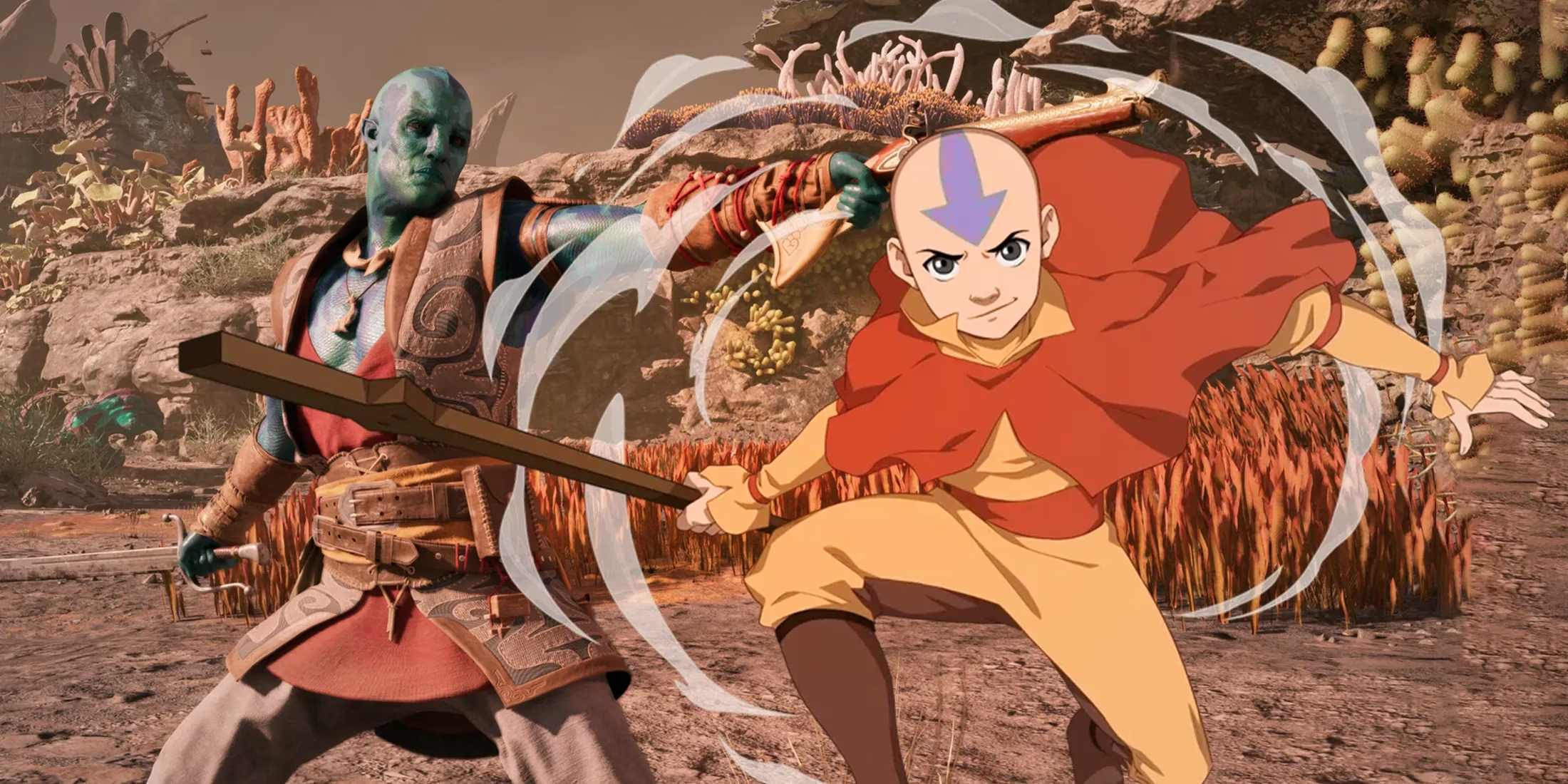
But Obsidian Entertainment didn't stop at a single kawaii cabbage. The studio, famous for burying narrative treasures like a squirrel hoarding acorns, has woven a tapestry of references that span its own legacy and beyond. Avowed shares its bones with the Pillars of Eternity duology, so fans of those games wade through documents dripping with callbacks to the Dyrwood, the Saint's War, and the Watcher's journey. It's a scavenger hunt designed for veteran lorehounds, where a casual comment about animancy feels like bumping into an old friend at a crowded market. Beyond internal nods, sharp-eyed players have spotted subtle hat-tips to other franchises, like a sly Mass Effect reference slipped into the game's dialogue as deftly as a note passed under a desk. This approach turns exploration into a meta-game of pop culture bingo, rewarding curiosity with the dopamine hit of a well-placed Easter egg.
When the game finally launched globally on February 18, 2025, it brought with it a storm of critical praise that mirrored the intensity of a bïaŵac rushing into Deadfire’s harbors. Reviewers celebrated its meaningful choices, rich environmental storytelling, and combat that felt weighty and precise. The art direction earned comparisons to a living oil painting where every ruin whispered a secret. Yet, even masterpieces carry a blemish or two; several critics noted that the ending landed like an anticlimactic thud — a finale that promised a thunderclap but delivered a polite cough. Still, the aggregate mood was overwhelmingly positive, with an OpenCritic rating that reflected a game both daring and deeply human.
Fast-forward to 2026, and Avowed has aged like a well-seasoned cast iron skillet. The community has continued prodding every corner of the Living Lands, unearthing ever more obscure secrets. The cabbage merchant Easter egg remains a beloved totem — a symbol of how the game can pivot from high-stakes divine drama to slapstick vegetable tragedy without shattering immersion. It’s a reminder that in an industry sometimes as serious as a funeral dirge, a development team willing to let players laugh at a distressed cabbage salesman is a rare and precious thing. Obsidian’s RPG now stands shoulder to shoulder with other monuments of player-driven discovery, its world still humming with the quiet joy of being thoroughly, nerdily alive.