As I look back on my time in the Living Lands, I can't help but feel a sense of missed opportunity. Avowed, for all its promise, often felt like a beautifully painted mural that you're only allowed to view from behind a thick pane of glass. The world is there, the potential is enormous, but a series of small, frustrating barriers kept me from truly losing myself in it. It's a game that feels perpetually on the cusp of greatness, like a master chef's recipe that's missing just one crucial spice. With the game now over a year old and the community's feedback echoing in the halls of Obsidian's forums, I've been thinking about what specific changes could have transformed my experience from a pleasant stroll through a fantasy diorama into a truly unforgettable adventure. These aren't demands for a complete overhaul, but rather, the key adjustments that would have made the world breathe, react, and feel truly lived-in.
10. Give Us Consequences for Thievery
Let's start with something that seems small but has the impact of a pebble in a boot on a long journey. The complete lack of consequences for stealing in Avowed made the world feel less like a living society and more like a meticulously arranged dollhouse where I was the only one with agency. I could walk into a noble's private chambers, pocket their ancestral heirloom right in front of them, and they'd just... continue their idle animation. The guards, those imposing figures in polished armor, were about as threatening as potted ferns. This absence of risk stripped the thrill from exploration. There was no heart-pounding tension of a stealthy heist, no need to case a joint or create a distraction. Making thievery illegal—and having the world react to it—wouldn't just add a mechanic; it would inject a fundamental dose of reality and stakes into every interaction. Suddenly, that shiny vase isn't just loot; it's a choice with potential repercussions.
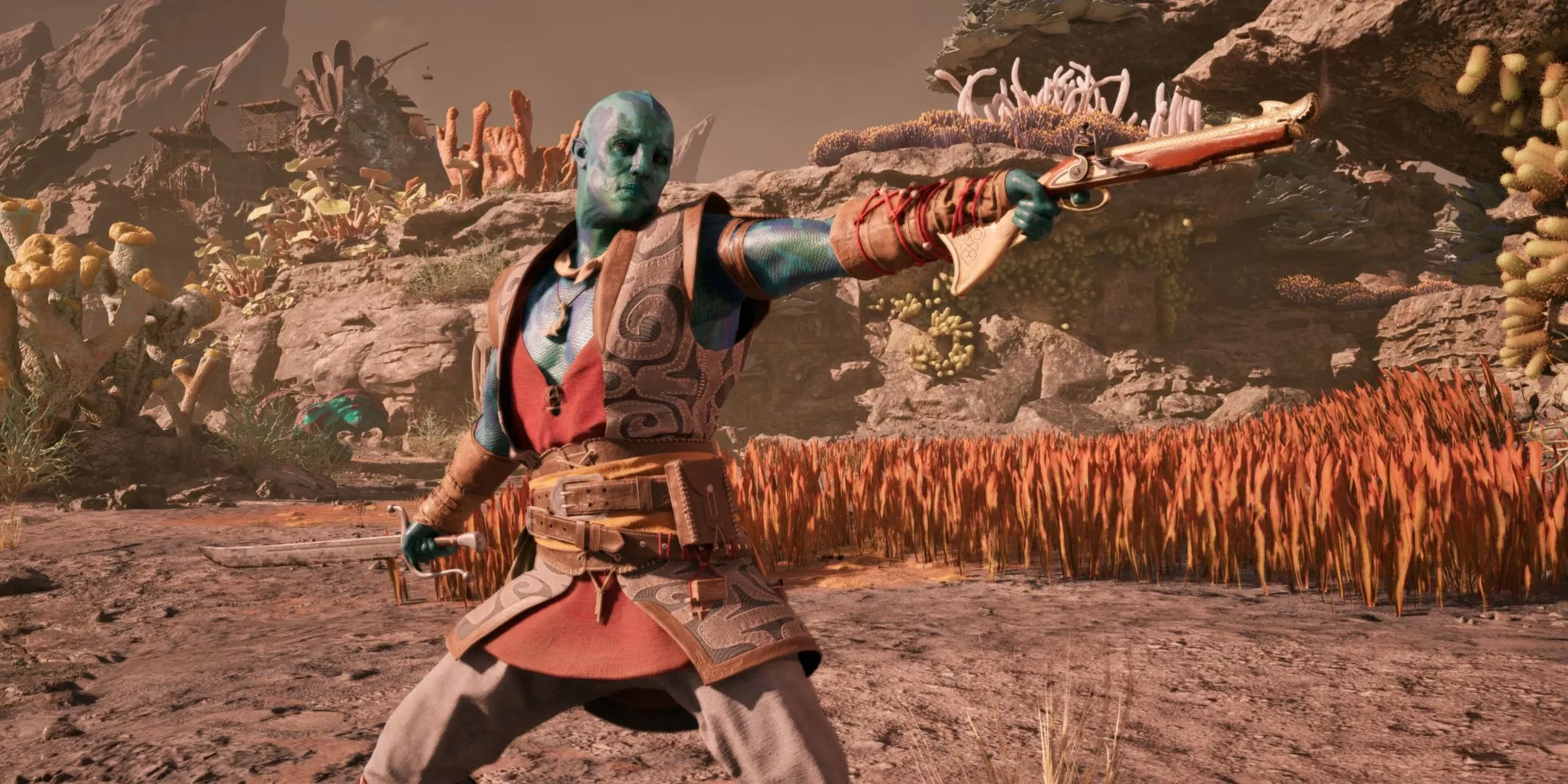
9. Progressively Better Loot: Beyond the Initial Gear Grind
Ah, loot. The lifeblood of any RPG explorer. In Avowed, the loot system felt like running on a treadmill that occasionally dispenses a slightly different brand of bottled water. Yes, I found "legendary" items, but they were so few and far between that the core loop of combat and exploration often boiled down to a scavenger hunt for upgrade materials. My trusty level-one sword, with enough enchanted whetstones and magical resins slapped onto it, could feasibly carry me to the final boss. This system made the act of delving into a dangerous, hidden ruin feel less like a treasure hunt and more like a chore list, where I was just checking off nodes for crafting components. The joy of discovery was muted. The game needs a loot ecosystem that feels alive and rewarding, where a perilous journey into a forgotten tomb is reliably met with a weapon or piece of armor that makes me gasp, not just another pile of iron ore.
8. Lively NPCs and Towns: More Than Just Quest Dispensers
The "Living" Lands, ironically, were populated by some of the most static NPCs I've encountered. They were like ornate statues programmed to deliver a single line of dialogue before resetting to their default pose. After completing a side quest for a blacksmith, he would return to staring at the same spot on his anvil for eternity. Where was the rhythm of daily life? Where were the villagers heading to the tavern at dusk, or farmers tending their plots? Injecting simple schedules, ambient conversations between NPCs, and a sense of purpose into their existence would be like switching from a still image to a live feed. Towns shouldn't just be hubs; they should be habitats.
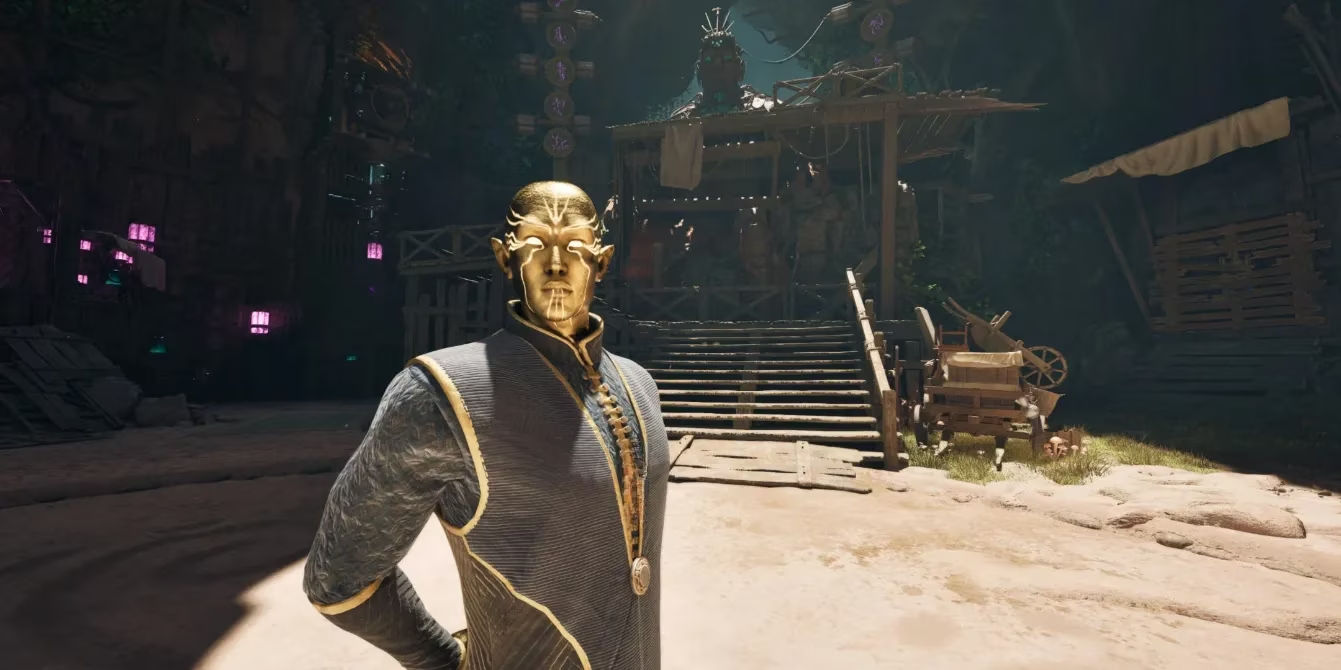
7. In-Game Appearance Changes: The Power of a Mirror
This is the quintessential quality-of-life feature that speaks volumes about player agency. Avowed has a fantastic, detailed character creator. I spent a good twenty minutes sculpting the perfect Godlike, only to realize ten hours in that their ethereal glow in certain lighting looked less "mystical ancestor" and more "walking nightlight." I was stuck. Adding a simple mirror at my camp, or a wandering "Face-Shaper" merchant in a town, would have been a game-changer. It respects the player's connection to their avatar. Roleplaying isn't a static decision made in a menu; it's an evolving story. Let us earn scars from our battles, change our hairstyle after a major story beat, or dial our otherworldly features up or down as our connection to the world deepens. It’s a small touch that makes the journey feel personal.
6. A Truly Open World: Unlocking the Living Lands
Avowed's world structure often felt like being given a lavish, multi-course meal but only being allowed to eat from specific, pre-designated plates on the table. The zones are beautiful, but they are ultimately large, elaborate rooms connected by loading screens. Gazing at the world map was an exercise in melancholy, highlighting vast swathes of tantalizing landscape forever out of reach. Transforming this into a seamless, truly open world—or even just significantly expanding the accessible areas within the existing zones—would revolutionize the sense of adventure. It would turn exploration from a guided tour into an expedition. Imagine stumbling upon a hidden valley not because a quest marker led you there, but because you saw a strange rock formation and decided to climb it. The potential for emergent storytelling and pure, unscripted discovery would skyrocket.
5. Better Dialogue: From Lore Dumps to Living Conversations
Dialogue in Avowed could often feel as lively as reading an encyclopedia entry aloud. Don't get me wrong, the lore of Eora is deep and fascinating, but its delivery was frequently a monologue disguised as a conversation. My companion, Kai, might comment on a strange fungal growth with the emotional cadence of someone reading a weather report. My choices as the Envoy, a supposedly influential diplomat, often seemed to bounce off NPCs like rain off a statue. The dialogue needs reactivity, personality, and flair. It needs the witty, reactive back-and-forth that Obsidian is famous for. NPCs should remember my deeds and adjust their tone accordingly. A conversation should feel like a tennis match of personalities, not a one-way data transfer.
4. Character Factions and a Reputation System: The Weight of Choice
In the current Avowed, it feels like everyone is just waiting to love the Envoy. My alignment was a foregone conclusion. Introducing proper factions—the Empire Loyalists, the Dreamscourge Researchers, the Indigenous Rebels, the Merchant Princes—with a deep reputation system would weave a web of consequence throughout the entire game. Allying with one group should naturally alienate another. Helping a village defend against Imperial tax collectors shouldn't just net me some gold and XP; it should make Imperial guards in the next town spit at my feet and call me a traitor. This system would make every quest a meaningful political decision, not just a task to complete. My reputation would become a tangible part of my character, as visible and impactful as the armor I wear.
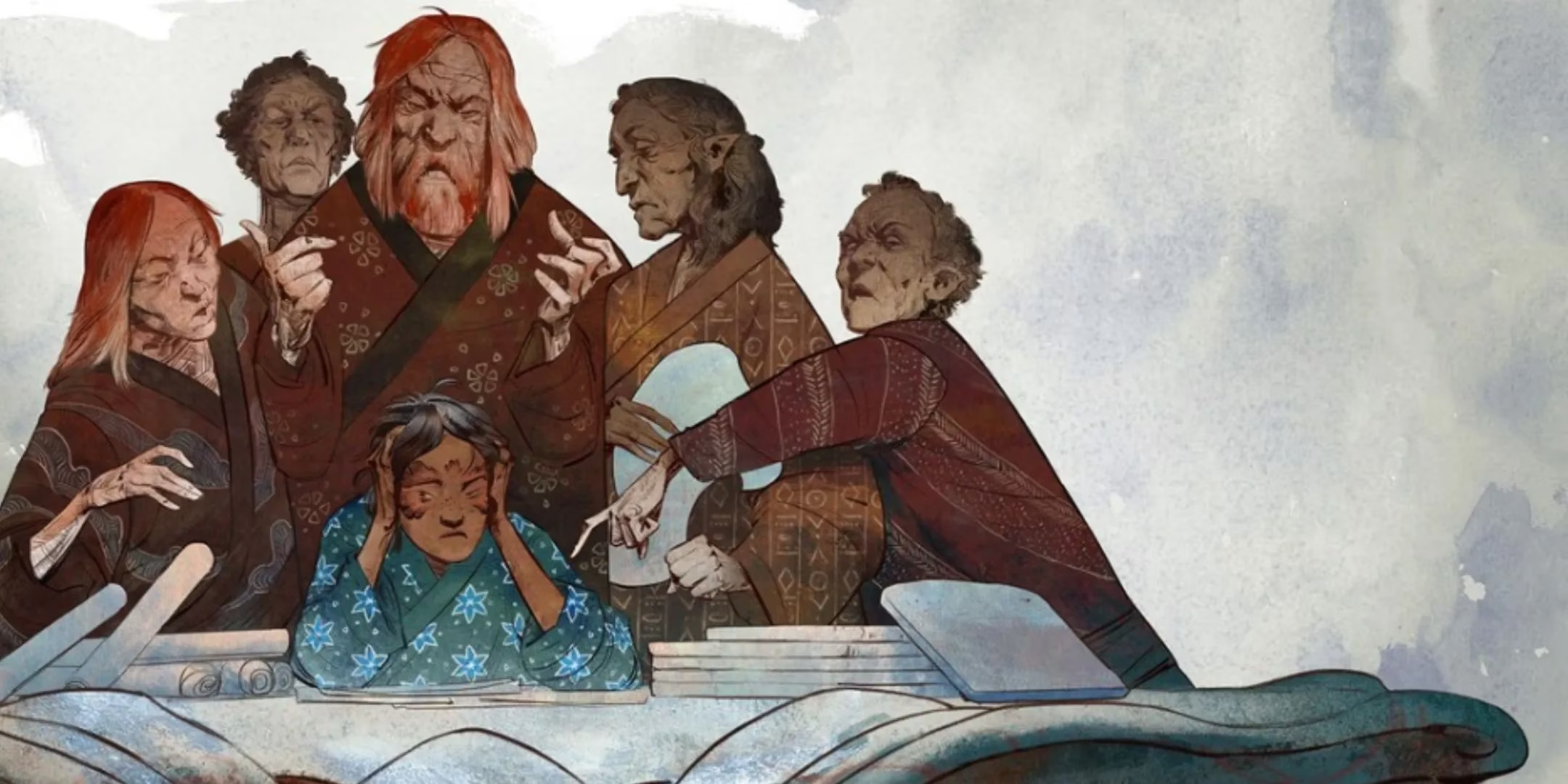
3. Faster Companion Collection: Avoiding Attachment Whiplash
The companion system suffered from a pacing issue that felt like narrative whiplash. I got Marius and Kai almost immediately, and then... nothing for a long, long time. If you didn't gel with their personalities, you were stuck in a forced, awkward road trip for hours. Conversely, if you loved them, you became so attached that when new companions like Yatzli or Giatta finally showed up, they felt like interlopers in your well-established crew. Spreading out companion acquisition more evenly would solve both problems. It would allow players to experiment with different party synergies and combat styles much earlier, and it would let the companion stories unfold in parallel, creating a richer, more dynamic group dynamic. Let us build our crew organically, not in two distinct batches.
2. An Interactive World: Beyond the Scripted Crate
This was perhaps my biggest immersion breaker. The world of the Living Lands is stunning, but interacting with it is like trying to have a conversation with someone who only has pre-recorded responses. I could only interact with what the game explicitly highlighted. That bookshelf full of tantalizing tomes? A static prop. That suspicious-looking loose floorboard? Part of the texture. This made the world feel like a museum exhibit—look, but don't touch. Opening this up would be transformative. Let me pull every book off the shelf (even if they're just flavor text repeats). Let me try to pick the lock on every door (even if most are just "too difficult"). Let the world have a physical, manipulable consistency. This turns exploration from observation into participation. The world stops being a backdrop and starts being a playground.
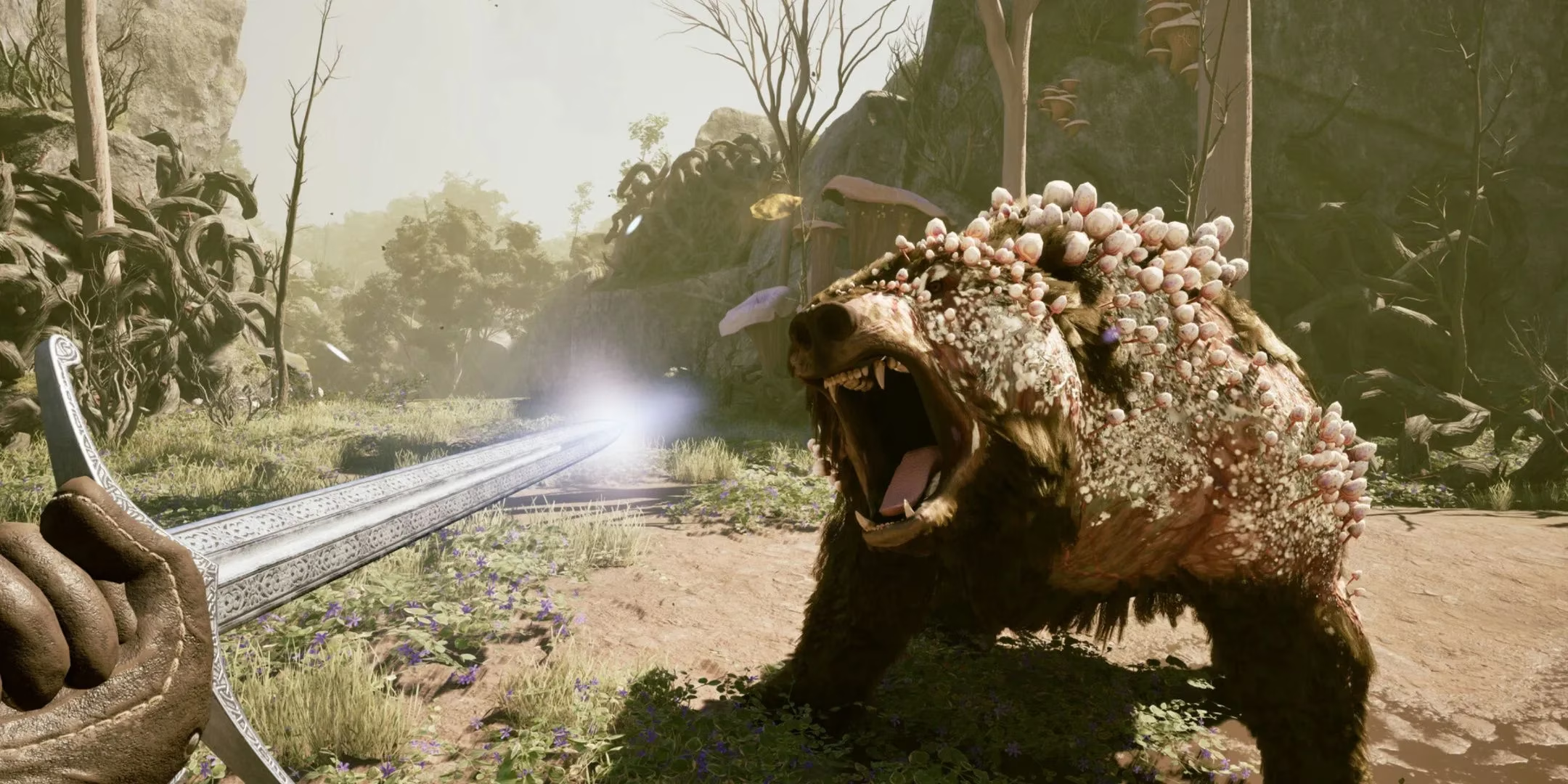
1. Selective Enemy Respawns: Keeping the Wilds Wild
Finally, let's talk about the eerie quiet that falls over the Living Lands. Once I cleared an area of Xaurips or bandits, it stayed cleared. Permanently. Returning to a previously vibrant forest or canyon only to find it as silent as a tomb utterly killed the sense of a living, breathing ecosystem. I'm not asking for boss respawns, but for common enemy camps to repopulate after a time. Maybe new creatures move into the vacuum. Maybe a scavenger group sets up in the old bandit hideout. This isn't just about grinding; it's about verisimilitude. Nature abhors a vacuum, and a fantasy world should too. It makes the wilderness feel dangerous and alive, ensuring that travel always carries a hint of unpredictability. The world should feel like a pond where ripples eventually settle, not a frozen lake.
Looking at Avowed through this lens, it's clear the foundation for a masterpiece is all there. It's a canvas splashed with breathtaking color, waiting for the final, defining brushstrokes of systemic depth and reactive life. Implementing even a handful of these changes would be like switching the game's heart from a reliable metronome to a wild, pounding drum—it would transform a competent, pretty RPG into the living, breathing, and unforgettable odyssey it always had the potential to be. Here's hoping that in 2026 and beyond, patches or future projects take this blueprint to heart.