I remember the strange mix of relief and unease I felt when Indiana Jones and the Great Circle finally hit my console. It launched in December 2024, that weird liminal release window where a game arrives too late for Game of the Year conversations and too early to become January's surprise breakout. Still, I kept playing, and apparently so did a lot of other people. Microsoft later said the game had been played by more than four million players. Those numbers felt strong to me, even if Game Pass made it tricky to determine how much actual revenue the game generated. Heading into 2025, that momentum felt valuable, but I couldn't shake the feeling Xbox was standing at a crossroads.
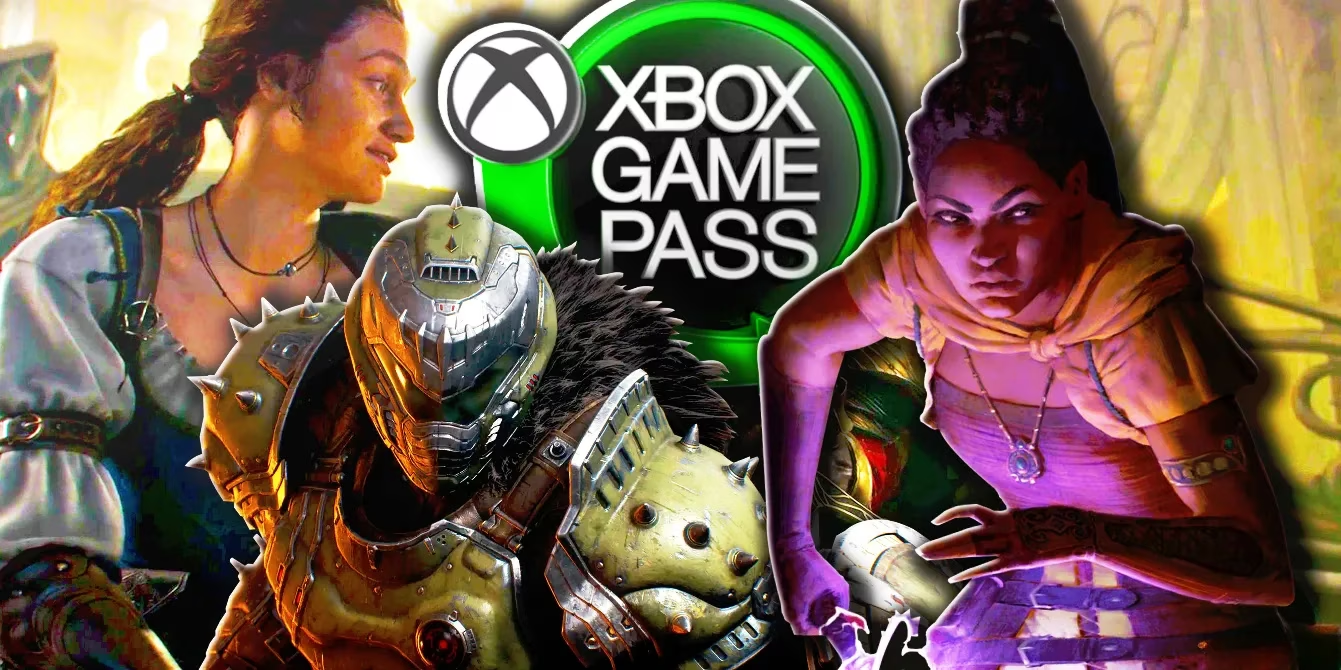
2024 Put Xbox in a Deeply Weird Place
From my perspective as a player, 2024 was the year Xbox stopped making sense as a traditional console rival. The year began with fans melting down over whether Microsoft would even stay in the hardware game at all. I watched forums explode when the company shifted focus away from exclusives. Not long after, games like Hi-Fi Rush and Grounded, which had previously been Xbox exclusives, made the jump to Switch and PlayStation 5. Then the Hi-Fi Rush team was dropped altogether, which felt like a gut punch to everyone who had championed that game.
As Xbox's apparent strategy became clearer, I felt like I was waiting for the other shoe to drop. Would there be any limits on which games could make the leap? Surely flagship franchises like Halo and Gears of War would remain exclusive, right?
Wrong. Xbox head Phil Spencer said there were "no red lines" around which games were or were not eligible for a port, including those flagship franchises. He later said Starfield wasn't off limits either. With Indiana Jones and Forza Horizon 5 both coming to PS5 in spring 2025, and The Outer Worlds 2 set for a multiplatform launch later in the year, it became increasingly difficult for me to imagine Xbox returning to its former position as a console manufacturer that could rival Sony and Nintendo.
A Packed 2025 Line-Up Felt Like a Pivot
Still, as I looked ahead to 2025, I saw a company with an enviable slate of games. Avowed, Obsidian's fantasy RPG, previewed incredibly positively. If it reviewed just as well, it would give Xbox an early win. And if Xbox kept to the same schedule it set with Indiana Jones and the Great Circle, I could reasonably expect a PS5 port by the end of the year. South of Midnight looked like it had the potential to be a breakout double-A hit. But Fable was the big exclusive I knew would have everyone rushing to their nearest Xbox-capable device.
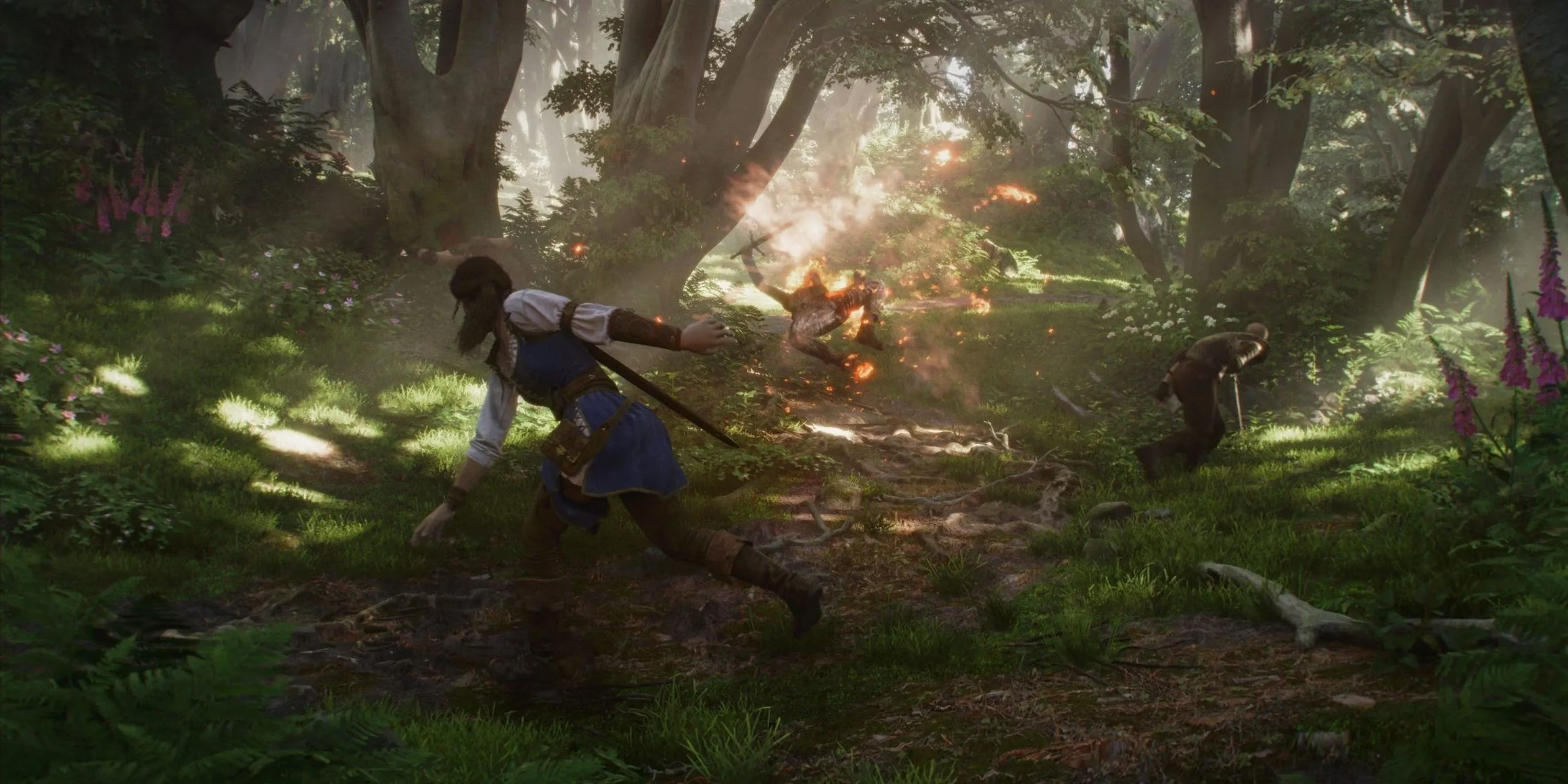
This was the moment I realized something important: Xbox didn't seem committed to doing the things required to compete as a console manufacturer anymore. But it did have a great line-up of games. That disconnect felt like an opportunity.
Multiplatform Heavy Hitters Changed the Conversation
The biggest signal for me was how many of Microsoft's heavy hitters were going multiplatform. Doom: The Dark Ages and The Outer Worlds 2 would both launch on Xbox, PC, and PS5. The next Call of Duty would be in a league all its own. This seemed to be Xbox's approach for its heaviest hitters, so I couldn't help but wonder: why not make it the approach for everything?
I started thinking about Xbox less as a box under my TV and more as a service that followed me wherever I played. The hardware mattered less. The library and the subscription mattered more. Game Pass was no longer just a perk; it was becoming the actual product.
Game Pass Became My Default Wishlist
The cornerstones were the games Xbox was publishing, but the games merely available on Game Pass were just as important to me. Last month's Citizen Sleeper 2: Starward Vector, March's Atomfall, and April's Clair Obscur: Expedition 33 all seemed likely to be talked about throughout the year. Each conversation felt like a billboard for Game Pass.
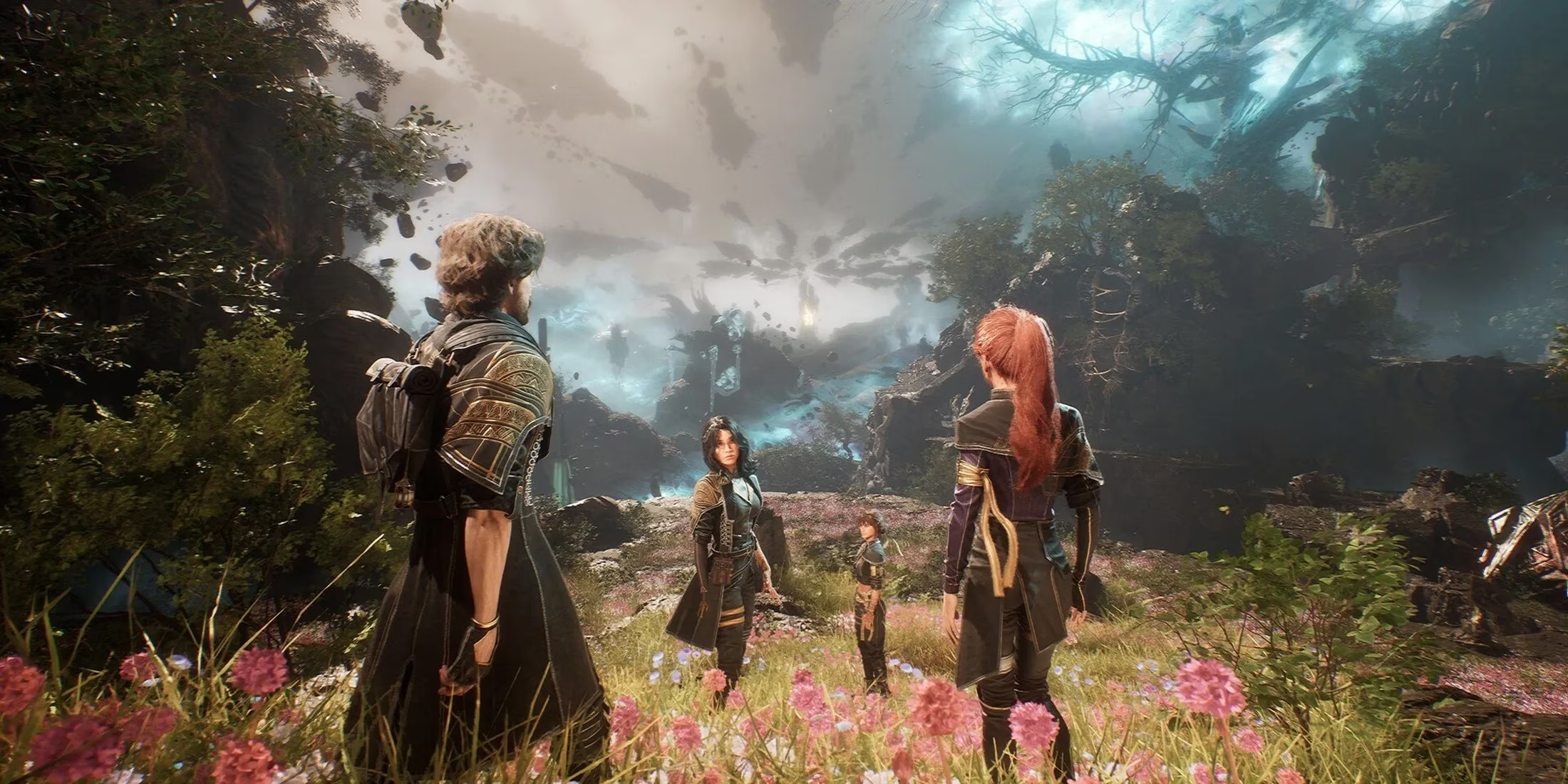
More than half of the games I was excited to play that year would be on Game Pass on day one. For the first time in years, Xbox was delivering the games, not just promising they would arrive at some point down the road. That changed how I planned my gaming calendar.
Here is how I saw the early 2025 line-up from my couch:
| Game | Why It Mattered to Me |
|---|---|
| Avowed | A fantasy RPG with positive previews and a possible PS5 port later |
| South of Midnight | A stylish double-A breakout candidate |
| Fable | The big exclusive that pulled me toward Xbox-capable hardware |
| Doom: The Dark Ages | A multiplatform heavy hitter that removed platform anxiety |
| The Outer Worlds 2 | A day one multiplatform launch from Obsidian |
| Call of Duty | A franchise in a league all its own |
2025 Was the Right Time to Go All-In on Game Pass
Looking back from 2026, the argument feels even clearer. Xbox had momentum from Indiana Jones, a packed release calendar, and a subscription service that many players already trusted. It no longer mattered much as a console manufacturer, but it had a stellar line-up of games. Why not seize the opportunity to exit the console game from a position of strength?
I don't need Xbox to beat Sony or Nintendo in hardware sales. I need it to put great games where I can actually play them. By making its games and Game Pass available everywhere, Xbox could shift from being a hardware manufacturer that also offered services to being a service provider first and foremost.
That was the real make-or-break question of 2025: would Xbox cling to the old console war, or embrace the service era while it had the games to back it up? From where I sat, with a backlog full of day one Game Pass titles, the answer felt obvious. 2025 was as good a time as any to go all-in on Game Pass, and I was ready.